If your child struggles to get through daily routines, start tasks, or finish what they begin, you’re not alone. Many autistic children experience challenges with executive functioning—the skills we use to plan, organize, and complete tasks.
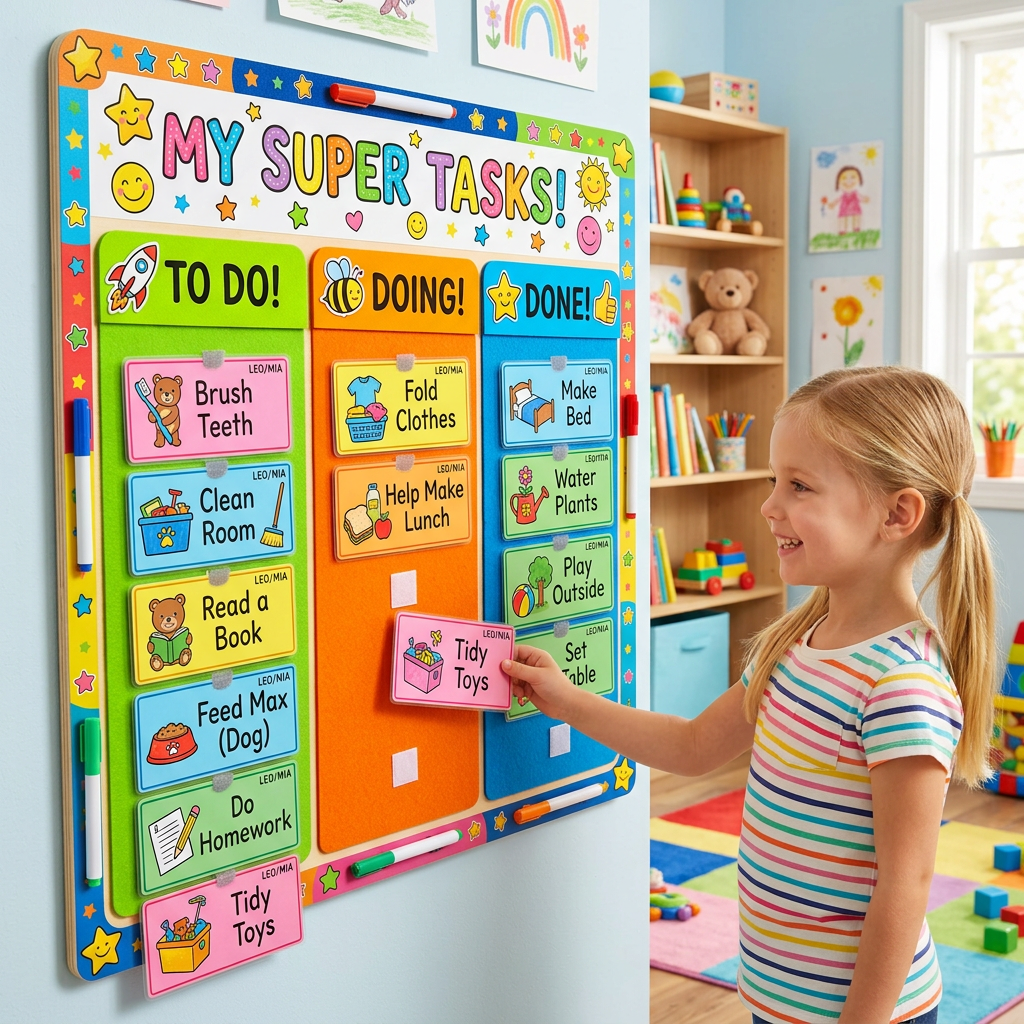
One simple tool that can make everyday life easier is a Kanban board for kids. It turns routines into something visual, predictable, and easier to manage.
Why routines can feel overwhelming
Even simple routines can involve many hidden steps.
For example, “get ready for school” might include:
- Getting dressed
- Brushing teeth
- Packing a backpack
- Putting on shoes
When these steps aren’t clearly laid out, a child may feel stuck, frustrated, or unsure where to begin.
What is a Kanban board for kids?
A Kanban board is a visual chart that organizes tasks into three simple columns:
- To Do
- In Progress
- Done
Instead of keeping everything in their head, your child can see what needs to be done and move tasks across the board as they go.
How a Kanban board helps autistic children
A Kanban board supports many common needs in a simple, practical way:
✔ Makes expectations clear
Your child can see exactly what to do—no guessing.
✔ Reduces overwhelm
Tasks are broken into small, manageable steps.
✔ Supports independence
Children rely less on constant reminders.
✔ Builds motivation
Moving a task to “Done” creates a clear sense of success.
✔ Helps with transitions
It’s easier to move from one activity to the next when it’s visually structured.
Everyday ways to use a Kanban board
Parents often use Kanban boards for:
- Morning routines (getting ready for school)
- After-school routines (snack → homework → play)
- Bedtime routines
- Chores and responsibilities
- Homework or learning tasks
You can adjust it to fit your child’s day and energy levels.
Simple tips to get started
- Start with 3–5 tasks only
- Use clear, simple wording
- Add pictures if your child prefers visual cues
- Keep the design clean and uncluttered
- Show your child how to move tasks step-by-step
It doesn’t need to be perfect—just consistent and easy to follow.
Want a ready-to-use Kanban board?
If you’d like a simple starting point, I’ve created a printable Kanban board for autistic children with clear columns and easy-to-use task cards.
Final thoughts
Supporting your child doesn’t mean doing everything for them—it means giving them tools that make things clearer and more manageable.
A Kanban board is a small change that can make a big difference in building confidence, independence, and calmer daily routines.
 Steadfast Planning